
A few weeks ago, I wrote an article about BOB in which I talked about my initial experience and how I had used it in Java. Now, some time later and after reaching the $200 ceiling, let’s talk about support for typical IBM i languages, RPG, and CL.
We are still a long way from being able to use it for many IBM i developers, because at the moment BOB is not able to connect to the system and scan the sources contained in classic source files. The situation is different for those like me who have sources on repositories such as Git. In fact, when you have the repo locally, BOB can unleash its full power.
Now, you should already know that in this article we will talk almost exclusively about documentation… this is one of the most requested use cases by various customers, because often the code that a customer has in their hands is poorly documented or not documented at all, there are no indications about flows and interactions, dependencies with objects and the database, etc., so I decided to do an in-depth analysis of this.
Let’s start with an example project, with about 20 CL programs and 12 RPG programs. Let’s start with the simple stuff and analyze an RPG program, asking it to make various comments on functions, etc.: “Hi bob, genereta english comments about kupdaute” and after few seconds I’ve my comments:
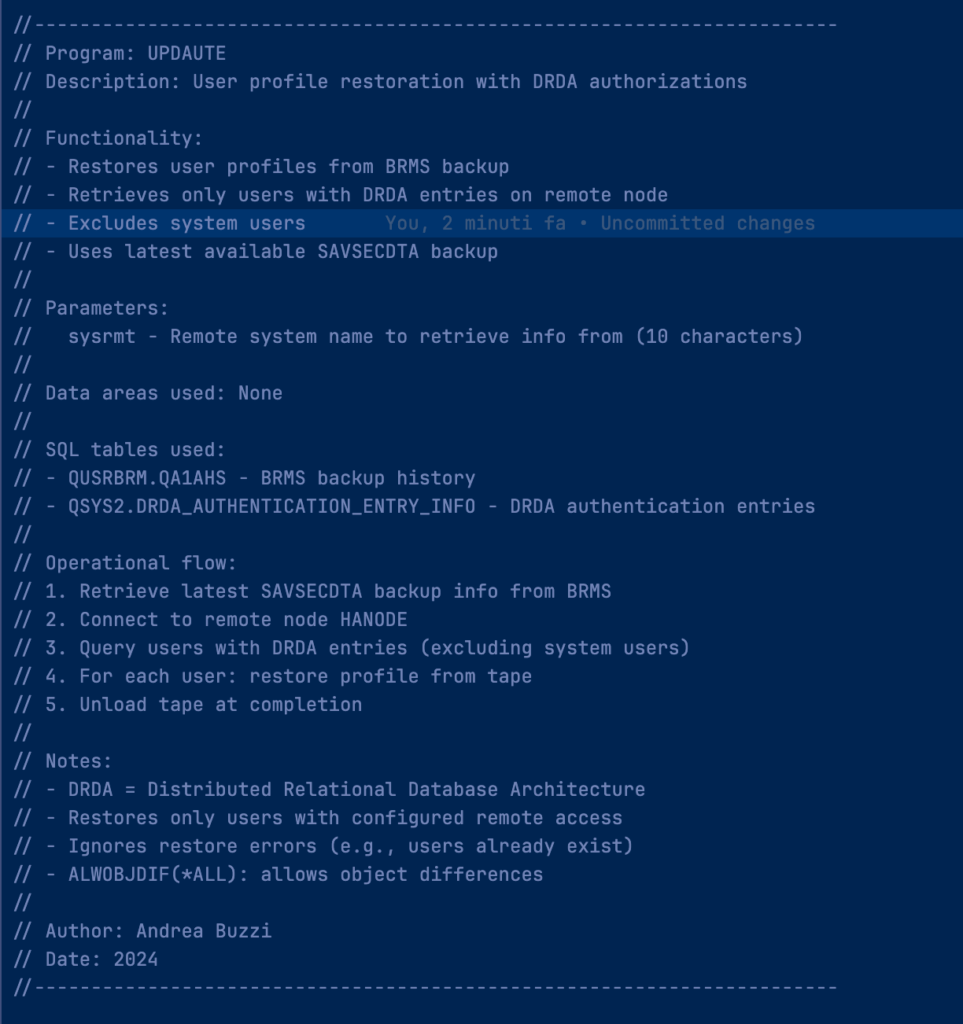
and

As you can see, it was able to generate comments for both the program itself and the individual operational steps that make up the application procedure, highlighting, for example, the database files that I was going to use. Let’s try now with a CL program:
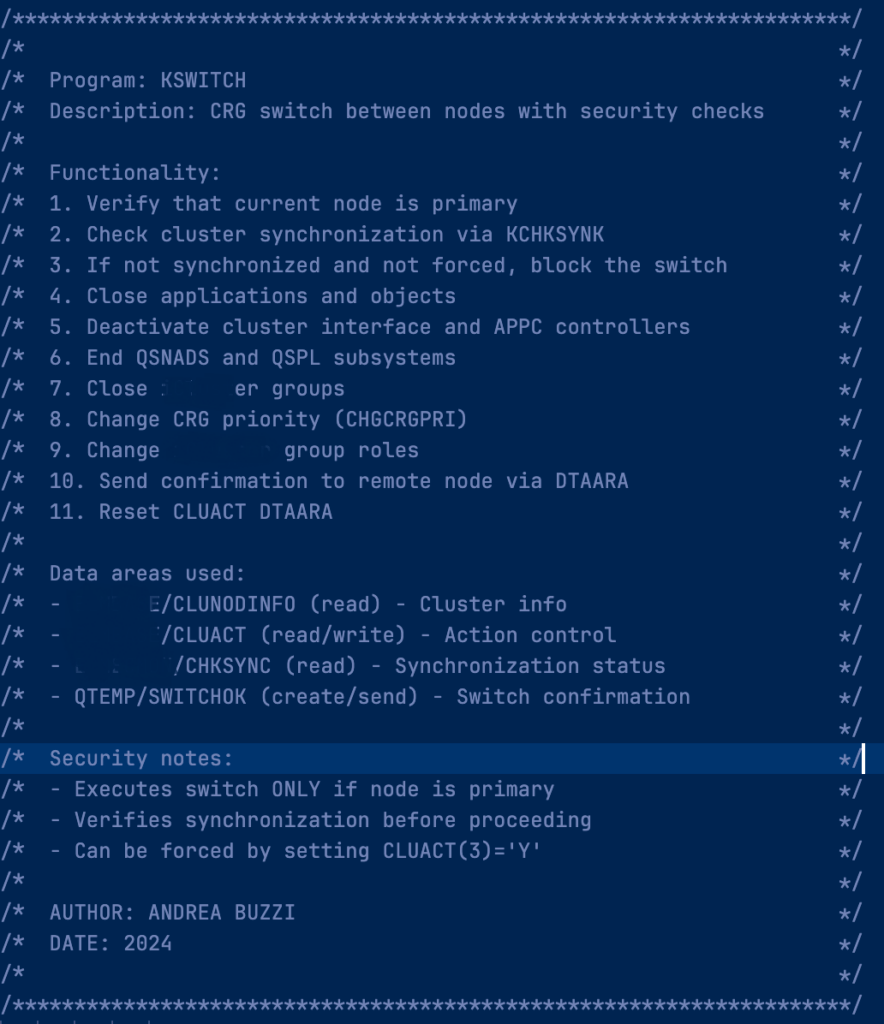
and
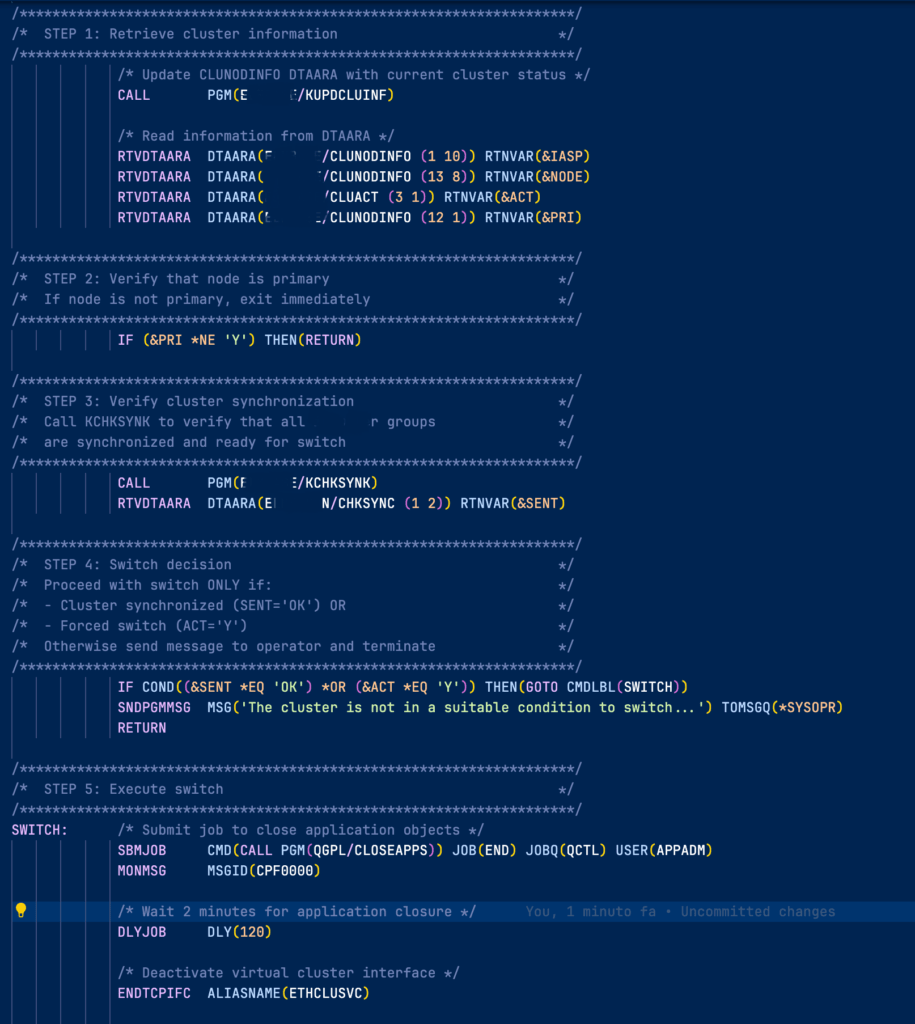
In this case too, the workflow was highlighted with the various planned features, followed by details on the individual stages. Furthermore, as you can see, particular attention was paid to DTAARA in this case. Now let’s ask BOB to generate a dependency report for the various programs. This is the output it generated for me:
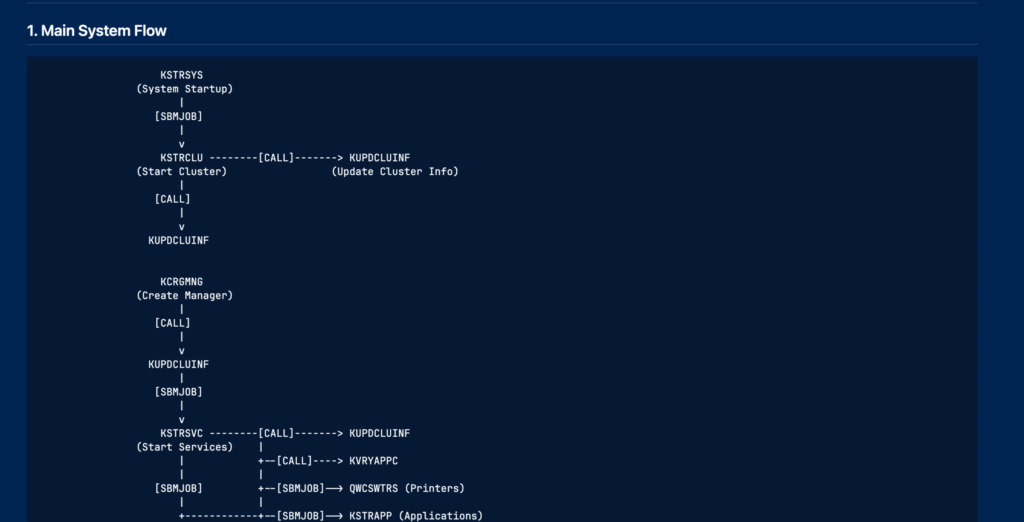
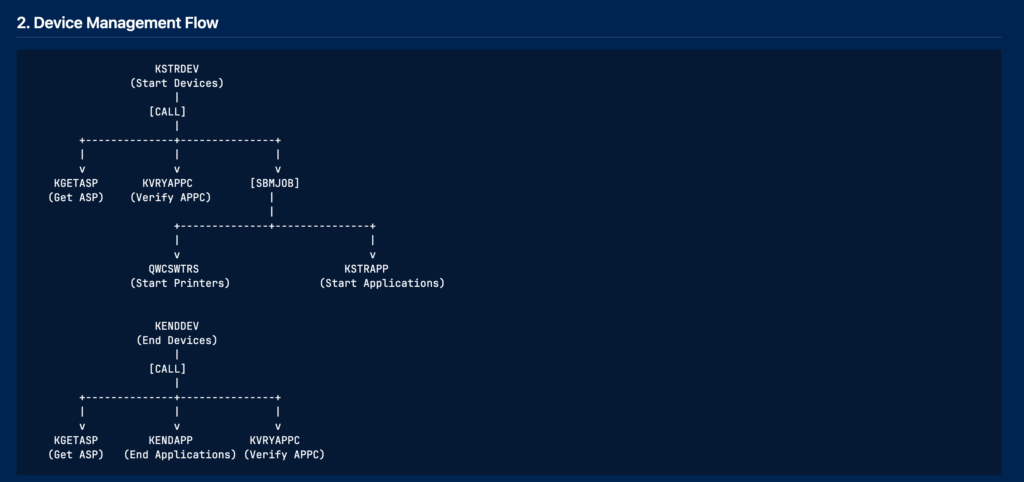
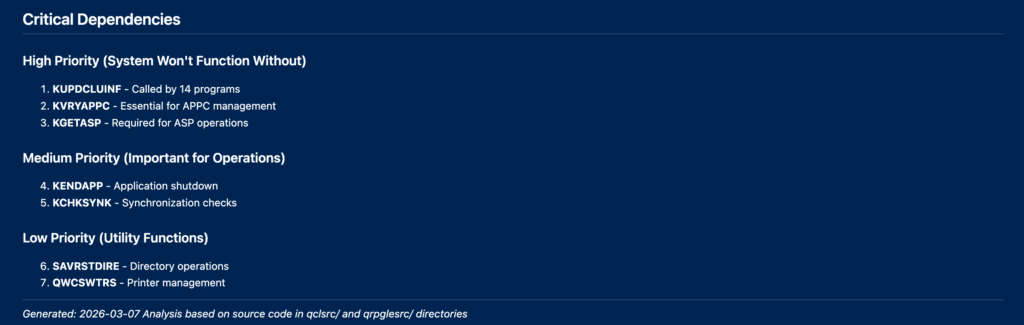
As you can see, it was able to identify all the relationships between the various programs and the expected invocation mode, whether internal or external to the project. It also generated statistical information about program calls:
The last point, I’ve asked bob to generate a Readme that list every program inside the project with the features provided, every DTAARA used inside the project with information about the usage:
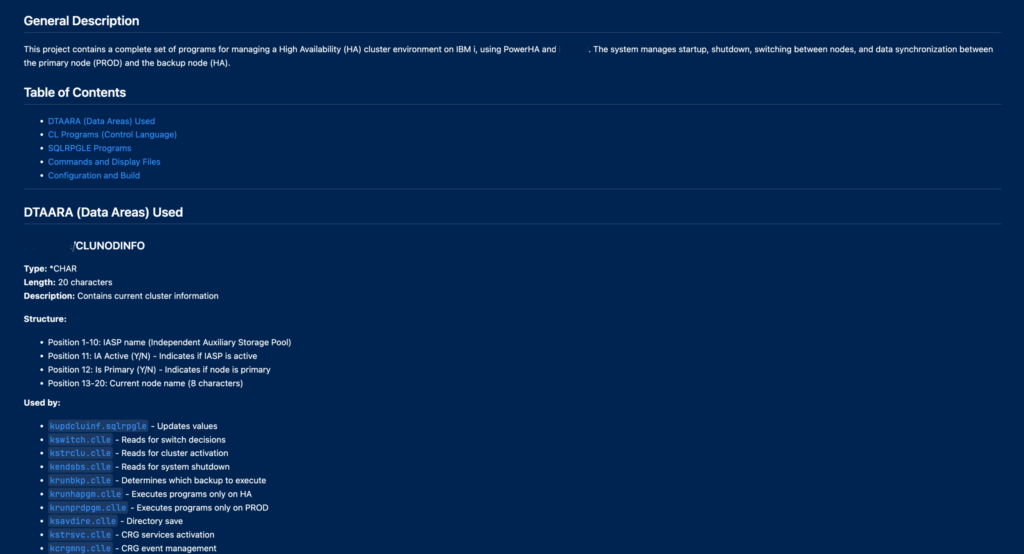
What I obtained was complete documentation, ranging from comments on individual programs to flowcharts and details such as dtaaras, their values, and dependencies.
What to say…. really really amazing!
Andrea